How to Lock an RV Door From Inside?
Locking an RV door from the inside sounds simple, but it actually depends on the type of lock installed, the door design, and the security level you want. Many RV owners assume it works like a house door, but RV doors are engineered differently, often combining lightweight construction with multi-function locks.
This guide explains every method in detail, backed by real usage data, lock types, and practical scenarios so you can secure your RV properly whether you are sleeping, traveling, or parked.
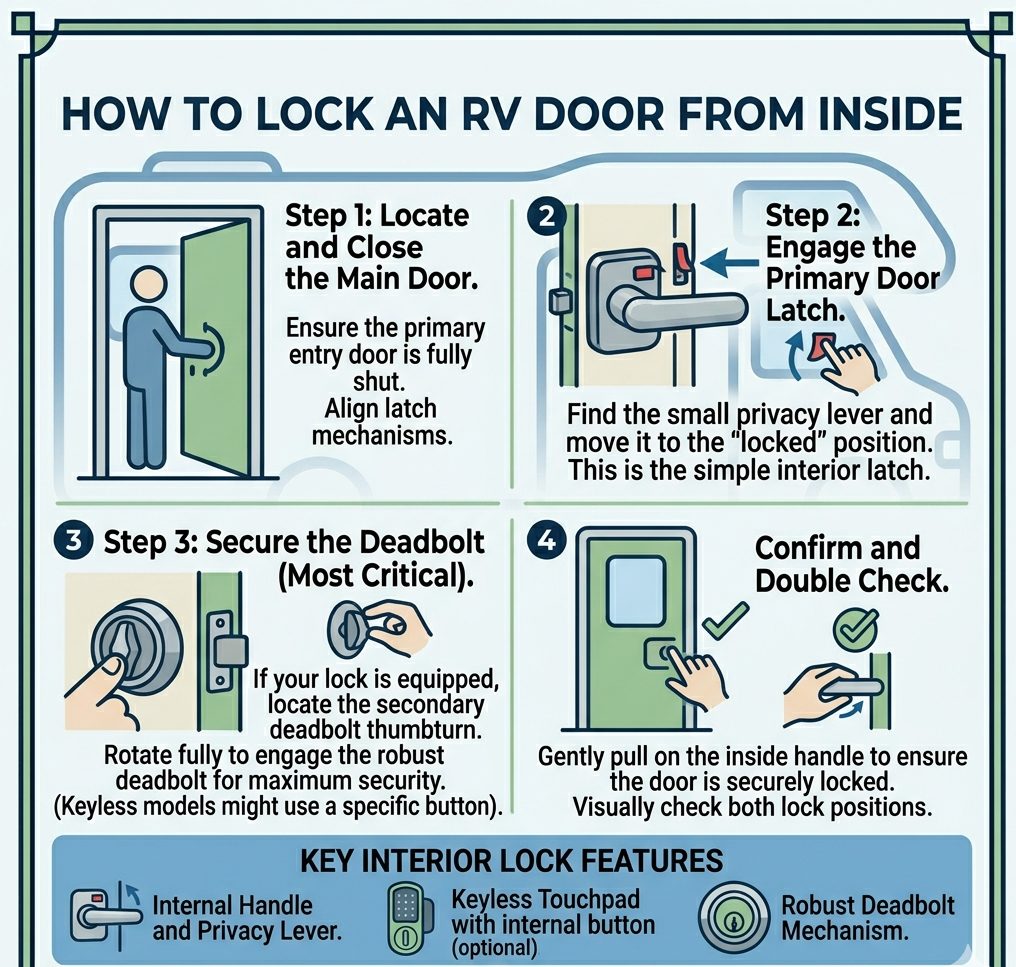
Understanding How RV Door Locks Work
Most RV entry doors use a combination lock system rather than a single locking point.
Typical RV Door Lock Structure
| Component | Function |
|---|---|
| Paddle handle | Opens and closes the latch |
| Primary latch | Keeps door shut when closed |
| Deadbolt | Provides additional security |
| Interior thumb turn | Locks door from inside |
This dual-lock system is standard in modern RVs and is the reason you often need more than one step to fully secure the door.
The Three Main Ways to Lock an RV Door From Inside
1. Using the Interior Thumb Turn Lock
This is the most common method.
Inside the door, you will find a small rotating knob or lever. Turning it engages the internal latch.
How It Works
- Close the door completely
- Rotate the thumb turn clockwise or counterclockwise
- The latch locks into place
Effectiveness
| Factor | Rating |
|---|---|
| Ease of use | Very high |
| Security level | Basic |
| Speed | Instant |
This method is ideal for quick locking but does not provide maximum security on its own.
2. Engaging the Deadbolt
Most RV doors include a separate deadbolt located above or within the main lock assembly.
Steps
- Close the door fully
- Turn the deadbolt knob inside
- Ensure it fully extends into the frame
Why It Matters
The deadbolt is the primary security feature.
| Feature | Latch Only | With Deadbolt |
|---|---|---|
| Forced entry resistance | Low | High |
| Door stability | Moderate | Strong |
| Security level | Basic | High |
Using both latch and deadbolt together significantly improves protection.
3. Using Keyless or Smart Lock Systems
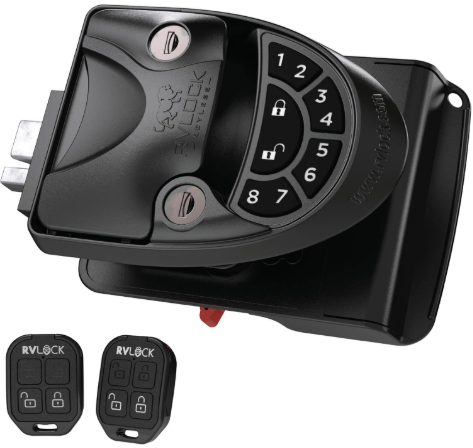
Modern RVs often include keyless locks with internal controls.
These allow locking via:
- Interior buttons
- Touch panels
- Automatic locking timers
Keyless Lock Features
| Feature | Availability |
|---|---|
| Auto-lock | Common |
| Backlit keypad | Common |
| Remote control | Optional |
| Mobile app control | Advanced models |
From inside, you usually press a lock button or enable auto-lock mode.
Locking While Sleeping vs Traveling
The method you use should depend on your situation.
Recommended Setup by Scenario
| Scenario | Recommended Lock Method |
|---|---|
| Sleeping inside | Latch + deadbolt |
| Quick stop | Latch only |
| High-security area | Latch + deadbolt + extra device |
| Traveling in motion | Latch only (deadbolt optional) |
Deadbolts are sometimes avoided while driving to prevent structural stress, but this depends on door design.
Extra Interior Locking Methods (Advanced Security)
Some RV owners go beyond factory locks for added protection.
Popular Add-ons
1. Door Security Bars
Placed horizontally or diagonally to block forced entry.
2. Portable Door Locks
Clamp-style devices that reinforce the latch.
3. Strap Locks
Flexible locks that prevent door opening from outside.
Security Effectiveness Comparison
| Method | Security Level | Cost | Installation |
|---|---|---|---|
| Standard latch | Low | Included | None |
| Deadbolt | Medium to high | Included | None |
| Keyless lock | High | Medium to high | Moderate |
| Security bar | Very high | Low to medium | Easy |
| Portable lock | Medium | Low | Easy |
Combining methods provides the best results.
Common Mistakes RV Owners Make
1. Relying Only on the Latch
The latch alone is not designed for security. It is mainly for keeping the door closed.
2. Not Fully Engaging the Deadbolt
Partial locking reduces effectiveness significantly.
3. Ignoring Door Alignment Issues
Misaligned doors prevent locks from functioning correctly.
4. Assuming All Locks Are Equal
Factory locks are often basic and may not provide strong protection.
Real-World Data on RV Break-ins
While exact numbers vary, general trends show:
- Most RV break-ins involve forced entry through weak locks or windows
- Factory locks are often the weakest point
- Upgrading locks reduces risk significantly
Security improvements like deadbolts and reinforced locks can make a noticeable difference.
Installation and Usage Data
| Metric | Value |
|---|---|
| Time to lock door | Less than 5 seconds |
| Learning curve | Minimal |
| Failure rate | Low when properly aligned |
| Maintenance required | Occasional lubrication |
Example Lock Configuration in a Modern RV
A typical setup includes:
- Integrated latch and handle
- Separate deadbolt above the handle
- Interior thumb turn controls
- Optional keyless keypad
This setup allows multiple locking combinations depending on your needs.
When Your Inside Lock Is Not Working
If your RV door does not lock properly from inside, check these:
- Door alignment
- Loose screws in lock assembly
- Worn latch mechanism
- Obstruction in strike plate
Most issues are mechanical and can be fixed without replacing the entire lock.
Final Answer
To lock an RV door from inside, you typically use:
- The interior thumb turn to engage the latch
- The deadbolt for added security
- Or a keyless system for modern convenience
The safest approach is to use both the latch and deadbolt together.
Practical Takeaway
If you want real security inside your RV:
- Always engage the deadbolt when staying inside
- Use additional security devices in unfamiliar areas
- Consider upgrading to a stronger lock system
Closing Insight
Locking an RV door is not just about turning a knob. It is about understanding how each component contributes to safety.
The difference between basic and secure often comes down to one extra step.