Are RV Door Locks Universal? A Data-Driven Guide
If you search this question online, you will find a lot of vague answers. The truth is more technical and far more interesting.
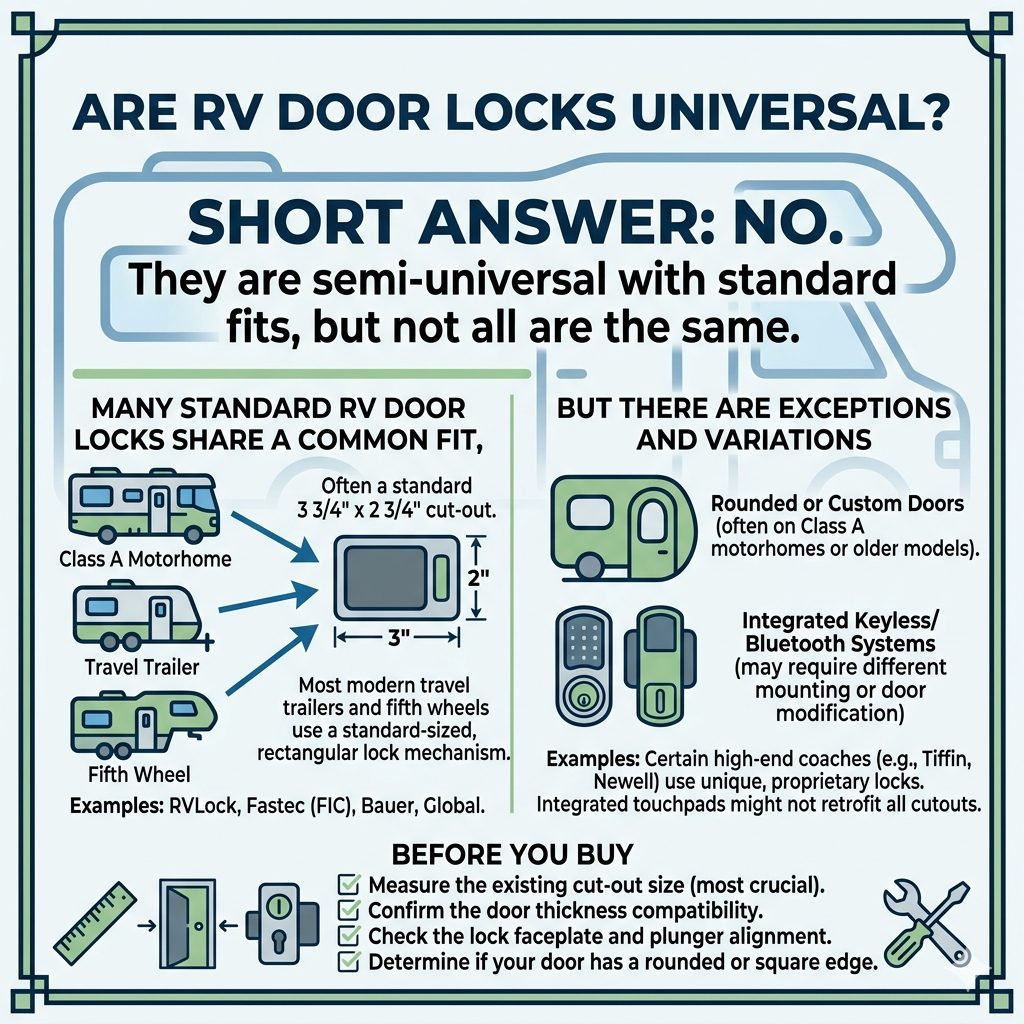
RV door locks are not truly universal. However, a large portion of the industry follows shared sizing standards, which creates partial compatibility across brands and models. That is why many products are marketed as “universal fit,” even though they do not work in every case.
This article breaks down the reality with real measurements, compatibility rates, security data, and practical examples so you can understand exactly how RV locks work and why the “universal” label is misleading.
The Core Concept Most People Miss
RV locks are not universal in design, but they are often standardized in dimensions. Some locks may close to be universals.
Manufacturers tend to reuse the same cutout size across many RV models to reduce production costs. This creates a situation where many locks can physically fit the same door opening, even if they are not truly interchangeable.
Common Industry Standard
| Specification | Typical Measurement |
|---|---|
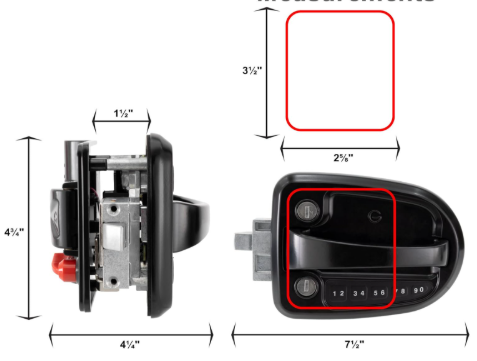
| Lock cutout size | 3.75 inches × 2.75 inches |
| Door thickness | 1.25 to 1.5 inches |
| Backset | Approximately 1.5 inches |
This single cutout size accounts for a large percentage of travel trailers and fifth wheels produced in the last 15 to 20 years.
Because of this, many replacement locks are designed around this exact template.
Why RV Locks Are Not Actually Universal
Even when the cutout size matches, several other factors affect compatibility.
Small differences in construction can prevent a lock from working properly.
Key Compatibility Variables
| Factor | Impact on Fit |
|---|---|
| Door thickness | Too thick or thin causes loose or tight installation |
| Latch alignment | Misalignment prevents locking |
| Deadbolt integration | Some locks include it, others do not |
| Handle orientation | Left vs right swing matters |
| Internal clearance | Electronics in smart locks need space |
Even a few millimeters difference can lead to installation failure.
That is why a lock can physically fit but still not function correctly.
Compatibility by RV Category
Not all RV types follow the same level of standardization.
| RV Type | Compatibility Level |
|---|---|
| Travel trailers | Very high |
| Fifth wheels | Very high |
| Motorhomes | Moderate to high |
| Older RVs before 2005 | Low |
| Custom or modified RVs | Very low |
| Storage compartments | Completely different system |
Storage locks are a separate category entirely. They usually use cam locks instead of handle locks and are not interchangeable with entry door locks.
The Hidden Security Problem
One of the most surprising facts about RV locks is how often they share keys.
Many factory-installed locks are not unique.
Real Security Data
| Metric | Estimated Range |
|---|---|
| Storage locks using shared keys | 60 to 70 percent |
| Common key type | CH751 |
| Entry door key variation | Limited but better than storage |
This means a single key can unlock multiple RVs, especially for storage compartments.
Dealers and service technicians often use master keys that work across many units.
This is one of the biggest reasons RV owners upgrade their locks.
Why Manufacturers Use Shared Systems
The lack of uniqueness is not accidental. It is driven by manufacturing efficiency.
Production Advantages
| Benefit | Explanation |
|---|---|
| Lower cost | Fewer parts and designs |
| Faster assembly | Standardized installation |
| Easier servicing | Dealers can access units quickly |
The downside is reduced security and limited customization.
Fit vs Function Reality
Many buyers assume that if a lock fits the opening, it will work perfectly. That is not always true.
| Feature | Universal Fit Lock | True Compatibility |
|---|---|---|
| Matches cutout size | Yes | |
| Aligns latch correctly | Not guaranteed | |
| Supports deadbolt | Sometimes | |
| Fits door thickness | Depends | |
| Smooth operation | Not always |
This is why some installations require adjustments or even minor modifications.
Types of RV Door Locks and Their Differences
Understanding lock types helps clarify compatibility.
1. Standard Mechanical Locks
These are the most common factory-installed locks. They offer the highest compatibility but the lowest security.
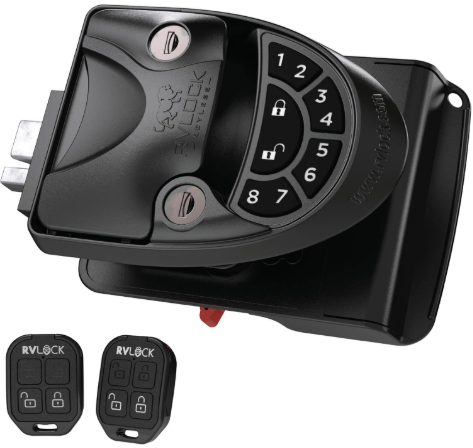
2. Keyless Entry Locks
These are designed to fit standard cutouts but require internal space for batteries and electronics.
3. Smart Locks with Bluetooth or App Control
These provide higher security and convenience but may have stricter installation requirements.
4. Heavy-Duty Aftermarket Locks
These are built with stronger materials but often require precise measurements.
Security Comparison
| Lock Type | Compatibility | Security Level | Typical Cost |
|---|---|---|---|
| Factory lock | Very high | Low | Low |
| Standard replacement | High | Medium | Moderate |
| Keyless lock | High | Medium to high | Higher |
| Smart lock | Moderate | High | Premium |
The pattern is clear. As security improves, compatibility tends to decrease slightly.
Material Quality and Its Impact
Most factory RV locks are made from zinc alloy, which is inexpensive but relatively weak.
Higher-end locks use reinforced materials.
| Material | Strength Level |
|---|---|
| Zinc alloy | Low |
| Aluminum alloy | Medium |
| Hardened steel | High |
Upgrading material significantly improves resistance to forced entry.
Installation Data
RV lock installation is generally simple, but not always foolproof.
| Metric | Value |
|---|---|
| Average install time | 20 to 30 minutes |
| Tools required | Basic screwdriver |
| DIY success rate | Around 85 percent |
Failures usually happen due to non-standard door dimensions or alignment issues.
Example of a “Universal Fit” Lock
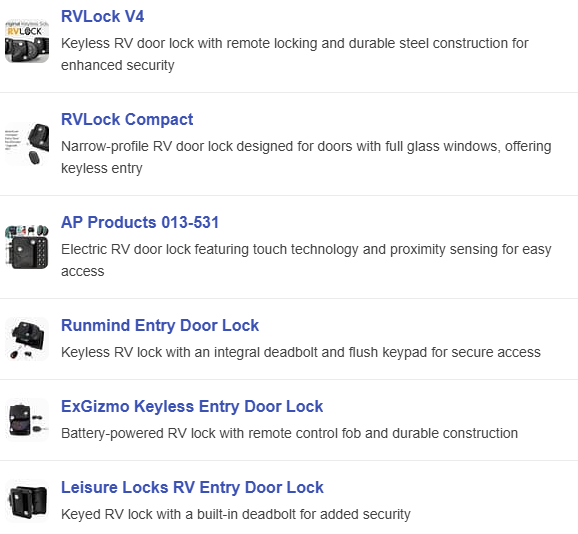
A typical aftermarket lock marketed as universal will include:
- Compatibility with 3.75 × 2.75 inch cutouts
- Support for doors between 1.25 and 1.5 inches thick
- Integrated handle and deadbolt
- No drilling required in standard cases
Even with these features, it may not work with older or custom RVs.
Final Answer
RV door locks are not universal in the strict sense.
They are partially standardized, which allows many locks to fit across different RVs, but true compatibility depends on multiple factors beyond the cutout size.
A more accurate way to describe them is this:
- Physically compatible in most modern RVs
- Functionally compatible in many cases
- Never guaranteed without measurement
Practical Takeaway
Before buying any RV door lock, always check the following:
- Exact cutout dimensions
- Door thickness
- Latch position and alignment
- Deadbolt configuration
Relying only on the term “universal” can lead to installation issues and wasted money.
Closing Insight
The RV lock market sits in a unique space between standardization and variation.
This creates convenience in replacements but also introduces risks in compatibility and security.
Understanding that balance is the key to choosing the right lock for your RV.